


Mall Blitz
BRAINWORKS PUBLISHING PTE. LTD.
I picked up Mall Blitz expecting a simple matching game, and that is exactly where its appeal lies. It is a free board game from BRAINWORKS PUBLISHING PTE. LTD. built around arranging supermarket-style objects into groups of three. The presentation turns a familiar shopping setting into a quick puzzle routine: find the right items, clear them, and work toward the current order.
What makes it worth discussing is not a complicated story or a deep competitive system. It is the way the game fits into ordinary spare moments, especially when a phone or tablet is shared around a household. I can imagine one person playing while waiting for dinner, then handing the device to someone else without needing a long explanation. At the same time, that simplicity comes with limits. Players looking for a large strategy game, a strong narrative, or a clearly separated personal profile may find the experience too lightweight.
How Mall Blitz works in a shared household
The central loop is easy to understand. The screen presents three-dimensional grocery or mall objects, and I look for matching sets of three. Completing those groups helps fulfil orders, so the immediate goal is not merely to tap identical objects at random. I have to scan the available items, decide which trio is useful, and avoid making the board harder to read than it already is.
That makes the game naturally suitable for short shared sessions. A parent can play a round while taking a break, a child can try the next puzzle, and another person can take over later. There is no need for a long tutorial conversation between turns because the basic action is visible almost immediately. For a shared device, that low learning barrier is a genuine strength.
Still, shared use works best when players treat the game as a turn-taking activity rather than assuming that everyone is progressing through a separate personal space. I would decide in advance whether the device belongs to one main player or whether the household is simply taking turns on the same progress. That small agreement prevents the common problem where one person changes the board or spends a resource that another person intended to save.
Related News

Threads in Real Life: Who Should Join, Lurk, or Leave

How SHEIN Turned Shopping Into an Endless Content Feed

How to Make Fortnite Feel Smarter on Mobile

Should You Switch to Microsoft Outlook on Mobile?

Why Gallery Keeps Pulling Users Back

X Review: Why Its Network Still Matters
The most useful household rule is simple: agree who controls progress before passing the device around. This matters more in a puzzle game than it might seem. A player who is thinking several moves ahead can be frustrated if someone else clears an attractive-looking trio without considering the remaining order. For younger players, that can become a learning opportunity; for adults sharing a phone, it may be better to keep sessions separate in practice, even if the game itself is being played on one device.
Why the supermarket theme helps
The setting gives the matching mechanic a readable identity. Instead of abstract colored tiles, I am looking at objects that resemble things found in a store. That visual context makes it easier to explain the game to someone who has never played a triple-matching puzzle. “Find three of the same item” is an instruction most people can understand without gaming experience.
The theme also makes the game approachable for mixed-age use. A younger player may enjoy recognizing and grouping objects, while an older player may focus more on planning the order in which groups disappear. The two players can enjoy different parts of the same board without needing different modes or complicated controls.
Gallery
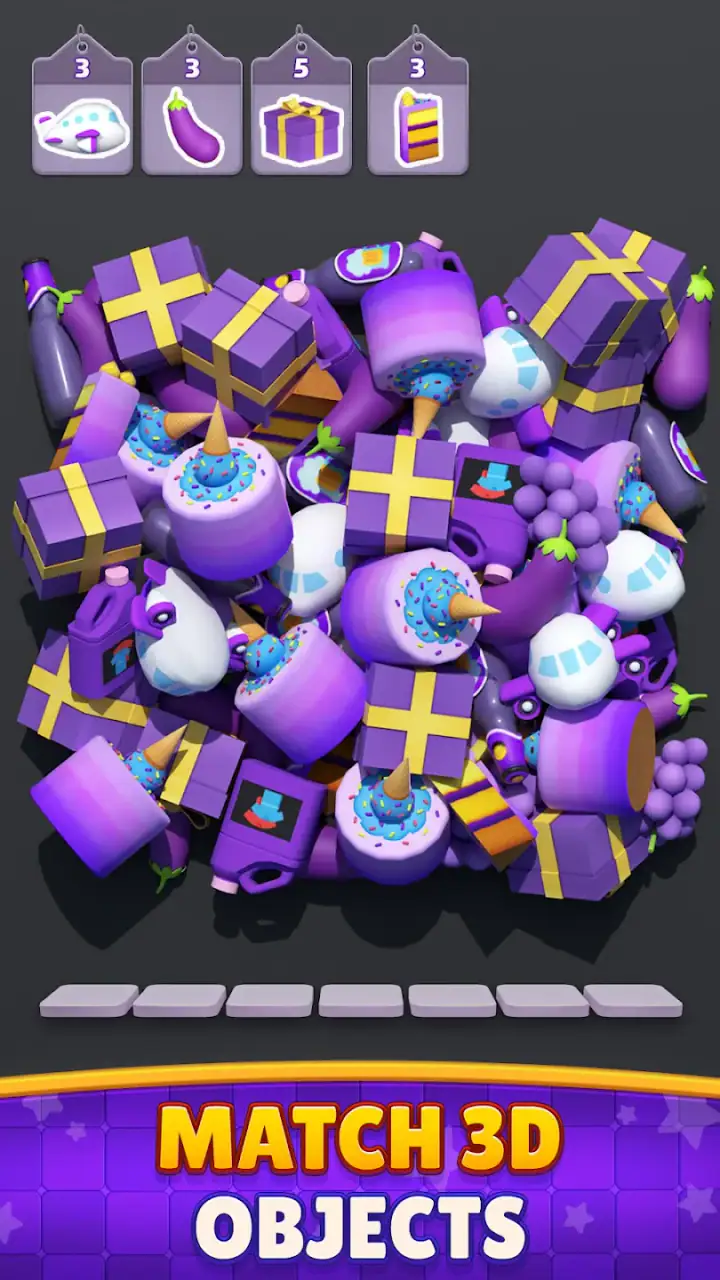
However, recognizable objects do not automatically make every board effortless. As the arrangement becomes busier, quick visual scanning can be less comfortable, particularly on a smaller phone. I found that a tablet or a larger display is more pleasant for shared play because two people can look at the board together. On a phone, the second viewer may block the primary player’s view or encourage hurried decisions.
Setting expectations before anyone starts
Mall Blitz is free to download, which removes the biggest barrier to trying it together. Its content rating is Everyone, so it is positioned as a broadly accessible game rather than one aimed at mature audiences. That does not mean every household should hand over a device without supervision. The important question is not only whether the puzzle is age-appropriate, but also whether the person using the device understands purchases and the difference between shared progress and personal progress.
The game includes in-app purchases ranging from $4.99 to $99.99 per item. That is the detail I would discuss before letting a child play on a shared phone or tablet. Even when the puzzle itself feels harmless, purchase decisions can affect the household if the device has a stored payment method. I would make the boundary clear: playing is allowed, but buying anything requires the device owner’s permission.
This is also a good reason to keep the game on the main player’s device when possible. If several people use the same phone, accidental taps and disagreements over saved progress become more likely. A dedicated device does not change the game, but it makes responsibility clearer. If the household must share, I would keep the session short, supervise purchases, and avoid treating the game as though it offered separate family accounts.
Coordination is part of the puzzle
Playing together changes the experience. One person may spot a matching trio while another notices that clearing it could leave a less useful arrangement. I like this because it creates a small amount of conversation without turning the game into a formal multiplayer event. The household can discuss choices aloud, then let one person make the final move.
A practical approach is to use a “caller and controller” system. The caller points out possible groups and explains which order seems safest, while the controller handles the taps. Swapping roles after a round keeps one person from dominating and gives less experienced players a chance to learn the board. It also reduces accidental moves caused by two people reaching for the screen at once.
Another helpful habit is to pause before clearing an obvious trio. The first matching group I notice is not always the best group to remove. I would scan the rest of the board, identify any rare or awkwardly placed objects, and then decide whether the easy match should wait. This is one of the more valuable lessons the game can teach: speed feels satisfying, but a few seconds of observation can preserve better options.
That habit is especially useful when a child is learning. Rather than correcting every move, I would ask what other groups are visible and which item might become difficult to reach. The game then becomes a gentle exercise in visual sorting and delayed choice. It remains casual, but the shared discussion adds more value than simply taking turns tapping as quickly as possible.
Age, trust, and device boundaries
The Everyone rating makes Mall Blitz a reasonable candidate for a family-friendly puzzle session, but age suitability is only one part of the decision. Trust around the device matters just as much. A child who can play the puzzle may not be ready to manage optional purchases, change device settings, or understand why a shared board should not be altered without asking.
I would separate three permissions in my own household: permission to open the game, permission to continue another person’s progress, and permission to spend money. They sound similar, but they are not. A player may be trusted with the first and not the other two. Making that distinction explicit avoids blaming someone for a mistake that was never explained.
The same principle applies between adults. If one person uses Mall Blitz as a personal relaxation game, another person should not assume that a free moment means the current puzzle is available for experimentation. A shared device creates a shared physical space, not necessarily shared ownership of progress. Keeping that boundary clear is more considerate than relying on the game to solve the arrangement for you.
I also would not use this title as a substitute for a broader family gaming system. Its appeal is the puzzle board in front of you, not household management. If your priority is individual profiles, detailed parental tools, or carefully separated progress, a platform or game designed around those needs will be a better fit. Mall Blitz can support respectful sharing, but the household has to provide the coordination.
What the puzzle feels like after the first sessions
After the initial novelty, the main question is whether the matching loop remains satisfying. For me, it works when I want a focused activity with a clear visual target. Searching for three related objects gives each short session a purpose, and completing an order provides a natural stopping point. I do not need to remember a complicated plot or rebuild a large strategy between visits.
The trade-off is that the game’s simplicity can become repetitive for players who need constant variety. The supermarket presentation gives the boards personality, but the underlying action remains based on finding and grouping threes. Someone who prefers word puzzles, traditional board games, or competitive matches may get more lasting interest from a different category. I would recommend Mall Blitz for casual sorting and observation, not as a replacement for a full tabletop experience.
Compared with a classic match-three game, this approach feels more like searching through a cluttered counter than swapping pieces in a fixed grid. That difference changes the skill involved. Instead of concentrating mainly on patterns and chain reactions, I am checking object identity, position, and the consequences of removing a group. Compared with a traditional board game, it is faster to start and easier to explain, but it offers less social structure and less room for long-term planning between sessions.
There is also a useful distinction between solo and shared play. Alone, I can take my time and follow my own scanning method. With another person watching, the board becomes conversational: one player sees a group on the left while the other is focused on an order elsewhere. That can make an ordinary puzzle more engaging, but it can also expose the game’s lack of a formal cooperative framework. The fun comes from the people sharing the screen, not from a dedicated team system I would expect in a multiplayer title.
Small techniques that improve the experience
My first tip is to scan in zones instead of searching the entire board repeatedly. I look across one area, note the objects that seem to belong together, and then move to the next. This reduces visual fatigue and makes it easier to remember which items I have already considered. On a small screen, this method is more reliable than rapidly jumping between distant objects.
My second tip is to treat the order as a planning prompt rather than a decoration. Before making an easy match, I check whether another trio is more important to the current request. This prevents the satisfying but unhelpful habit of clearing whatever is most obvious. The game becomes more deliberate without becoming slow.
My third tip is to use shared play as a verbal puzzle, but keep one person responsible for the final tap. Two people pointing at different objects can create confusion, especially when the display is crowded. Having one controller makes the session calmer and turns disagreement into discussion instead of accidental moves.
My fourth tip is to reserve the game for moments when a short visual task is welcome. It works well as a waiting-room distraction, a quiet break, or a brief activity before handing a device back to its owner. I would not choose it when I want a long evening of evolving strategy, because the core interaction is intentionally narrow.
Practical details before downloading
The game is available free of charge and currently listed as version 1.6.8. It was released on August 15, 2024, and supports devices running Android 7.0 or later. For a household using an older Android phone, checking the operating system before planning a shared session is sensible. A compatible device is especially important when children expect to play immediately, since disappointment over an unavailable installation can overshadow the otherwise simple setup.
Its reach is already substantial, with over 500 thousand installs, while the average store rating is 3.8 from around 686 ratings and 71 written reviews. I read that as a sign of a game with a clear audience but mixed experiences, rather than something everyone will automatically enjoy. The rating fits my impression: the basic idea is accessible and pleasant, yet the limited scope and purchase considerations will matter differently from one player to another.
The developer, BRAINWORKS PUBLISHING PTE. LTD., has kept the concept focused on the mall and supermarket matching idea. That focus helps the game explain itself quickly, but it also means I would not install it expecting a broad collection of unrelated board games. If you want one recognizable activity that can be learned in minutes, the focused design is helpful. If you want a large toolbox of modes, it is a reason to look elsewhere.
Who should choose it, and who should skip it
I would recommend Mall Blitz to someone who enjoys visual matching, light planning, and short sessions. It is particularly suitable for a household that wants an approachable puzzle to discuss on one screen, provided everyone agrees on turn-taking and purchase boundaries. It can also work for players who find traditional match-three boards too abstract and prefer identifying familiar objects in a more dimensional-looking arrangement.
I would be more cautious recommending it to a player who dislikes repetition or wants meaningful competition. The game does not become a deep strategy contest simply because the board can be challenging. A person seeking a strong narrative should choose a story-led game, while someone wanting social interaction may prefer a board game with explicit multiplayer rules. For families needing individual accounts and highly structured controls, a different title or platform will be more appropriate.
Adults should also consider how the purchase range fits their device habits. The free entry point is convenient, but the presence of optional items means I would not treat the game as entirely consequence-free on a shared device. A quick conversation and basic device safeguards are more useful than assuming the Everyone rating answers every household concern.
My household verdict
I enjoyed Mall Blitz most when I treated it as a compact visual activity rather than a complete board-game replacement. The supermarket theme makes the objective easy to share, the triple-matching mechanic gives each round an immediate purpose, and the low learning curve lets different people take part without a long explanation. Those qualities make it a good candidate for a shared break or a quiet turn-taking session.
Its weaknesses are equally clear. The core loop may not offer enough variety for dedicated puzzle fans, crowded boards can be less comfortable on a small phone, and shared-device use requires household rules that the game itself does not provide. The in-app purchase range also deserves an adult’s attention whenever children use a device with payment details attached.
My final recommendation is therefore selective but positive. Choose it if you want a free, approachable board puzzle that can be explained quickly and enjoyed in short bursts. Keep progress ownership and spending permission clear, and use one controller at a time when playing together. With those boundaries, Mall Blitz is a pleasant little household distraction; without them, the device-sharing friction can become more memorable than the matching itself.
FAQs for Mall Blitz
What is Mall Blitz, and how does the gameplay work?
Mall Blitz is a fast-paced shopping and time-management game in which you complete customer orders, collect products, and manage activity inside a busy mall. The gameplay generally combines quick decision-making with level-based objectives, upgrades, and increasing difficulty. As you progress, stages may require better planning because customers become more demanding and you have less time to complete each task successfully.
Is Mall Blitz free to download and play?
Mall Blitz can typically be downloaded and played without an upfront purchase, although the exact availability may depend on your Android or iOS region. Like many free mobile games, it may include optional in-app purchases for coins, boosters, extra lives, or other conveniences. You should review the store listing and your device’s purchase settings before playing, especially if children use the device.
Does Mall Blitz require an internet connection?
The basic gameplay experience may be available without a constant internet connection, which is useful when you want to play while traveling or in areas with weak reception. However, certain features can depend on being online, including advertisements, cloud saves, events, rankings, updates, and in-app purchases. For the most reliable experience, connect to the internet when installing, updating, or synchronizing progress.
Are there advertisements or optional purchases in Mall Blitz?
Mall Blitz may use advertisements as part of its free-to-play model, such as rewarded videos that offer extra coins, bonuses, or additional opportunities after completing a level. Optional purchases may also be available for removing waiting times or obtaining resources more quickly. These features are not necessarily required to progress, but players who prefer uninterrupted gameplay should check whether an ad-free option is offered.
Is Mall Blitz suitable for children and what devices support it?
Mall Blitz is generally easy to understand and suitable for casual players, thanks to its colorful presentation and straightforward objectives. Nevertheless, parents should check the age rating, advertising content, privacy information, and purchase controls listed in the relevant app store. Compatibility can vary by device, operating-system version, and region, so confirm the current requirements before downloading to avoid performance or installation problems.
Pros
- Fast-paced match-3 gameplay is easy to learn and enjoyable in short sessions.
- Bright mall-themed visuals make the game feel cheerful and inviting.
- A wide variety of levels helps keep the experience from becoming repetitive.
- Power-ups can clear difficult board layouts and create satisfying combos.
- Offline play makes it convenient for travel or areas with limited connectivity.
Cons
- Later levels can become frustrating without careful planning or extra boosters.
- Energy or life limits may interrupt play when you want longer sessions.
- Some rewards and features may require watching advertisements.
- In-app purchases can make progress feel slower for players who avoid spending.
- Small board elements may be difficult to distinguish on compact phone screens.


